
This is an old revision of the document!
Table of Contents
Savacola Bestiary
Emerald Darter
These flying insects of incredible size resemble dragonflies. An emerald darter has a long, thin body with a bright green carapace. Its head features four globelike eyes, and it moves about on three pairs of wings that beat too quickly for the eye to follow. In the wild, darters hunt small mammals. Natives have managed to tame them for use as mounts.
Kremit
 Small frog like creature, about 3ft in length. Shades of green, with shades of brown spots. Obnoxious and loud noise maker. Consider a pest and almost always harvested on site, because their meat is very tasty.
Poop Frog
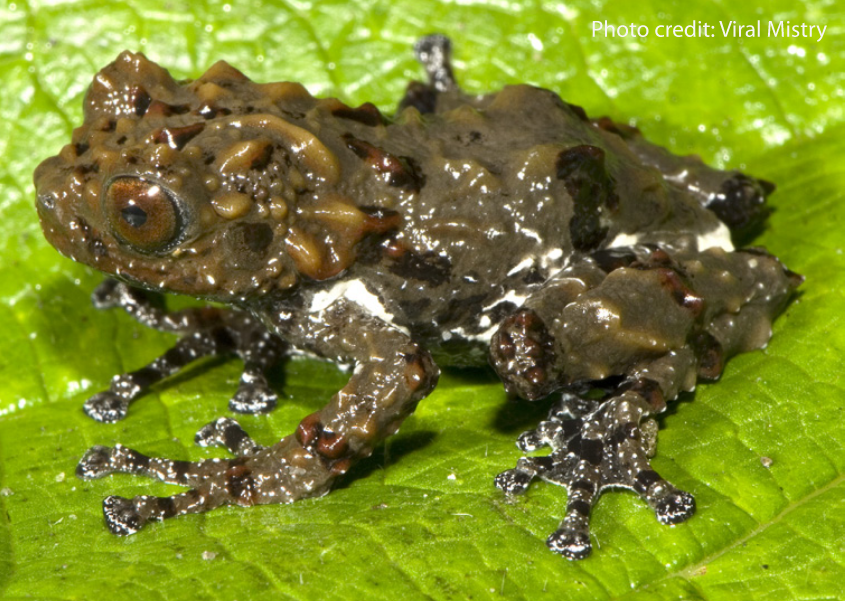 About a 6in long frog like creature that oozes poop from its skin as a defense mechanism. Very tasty if you can get past the poo.
Horror Talon
 A swamp beast that roams in packs. This creature is very territorial. It once was only seen in the deep forest swamp areas but since the plague started it a has come out and been a problem. The Horror Talon are very agile and stalks it prey.
They stand about 6-7 foot high at the shoulder and can weight 1800-2000 pounds.
Mutated Creatures
Grunt
 “I'm starting to think these events may have been the beginning of the zombie stories we have today. It certainly matches the pattern: Some kind of deadly infection hits a settlement, almost wipes out the whole population, and then the dead rise from their graves in order to feast on the living. Though this is the only zombie story I've heard where the zombies take up weapons - torches and blades in most cases - to wield against the living. It seems like the hunters of this era were simply calling them Grunts. There are conflicting reports of course, but the material I have found so far appears to be talking about what's probably a slow-moving and mostly human creature, possibly the victim of a viral infection” -unknown
Husk
 The Husk, named for their inhuman chitin, flesh dried, hardened. A hollowed husk of hope, a knight errant arrived dead on his horse.
The Husk, its name has proved remarkably ambiguous. Some invoke a defensive figure, one that is willing to slip back into its shell. That could not be further from the apparent truth, as many accounts suggest the opposite. A creature well protected, enabled to go on dangerous offensives. A shock troop; with more mobility, and so flexibility, than the gigantic Meathead
Hive
 The hive is a malformed husk of a woman, the torso of whom has been twisted and hijacked by a swarm of malignant stinging insects. A hive's torso has erupted to allow for expansion of the insects' dwelling, its body twisted and gnarled. Hives wander the swamps, unleashing veritable clouds of insects on anyone unfortunate enough to disturb them. “Of the ten creatures I have researched thus far, it is the Hive who haunts my dreams. Though she appears to have been classified alongside the other Grunts, she was a far more dangerous creature, setting a swarm of insects upon any human in range until their bodies were punctured and swollen and heaving with their vile poison. Only her own death - the death of their host, the Hive Mother - stopped their persistent attacks. Though she could be safely killed from afar with a shot to the head, the positioning of her body made the task difficult even for the best marksmen.”
Meathead
 “A thing simply called Meathead. Terrifying thing… A headless and massive, almost bloated, humanoid monster with leeches for hair. The stuff of nightmares.” Frankly, I'm not sure why they referred to this thing as a Meathead at all. The creature has no head. It could best be described as a bloated, headless, humanoid monster. More easily cut than shot; a hard hitter, but too well insulated to take much damage from a fist or a blunt object. It appears to have a symbiotic relationship with leeches, though these, too, are not the creatures you might recognize as such. The leeches appear to have acted as the creature's sensory organs, allowing him to see, to find prey, and to weaken that prey with their own poisonous bites. They are a clever extension of the creature, advance troops in a way.
Hellhound
 “First the facts: the so-called “Hellhounds” were pack animals (most often seen traveling in groups of between two and four), aggressive, and fast. These hounds would work together to take down a target, and while they do not appear to have any kind of special defenses, they did not have any particular vulnerabilities either. People have always feared dogs, even as they began to domesticate them and live side by side. Were these specimens really supernatural creatures, as reported? Or just highly aggressive, feral dogs, made all the nastier when the plague made food - and human kindness - scarce?”-Unknown